Take Five. A series in which I empty my pockets and set out the things I keep going back to (magazines, hotels, books, restaurants, furniture and lighting brands) and try to say honestly why. It is not a ranking, and nothing in it is sponsored. Think of it less as a list of recommendations than as being handed the pile from beside my desk.
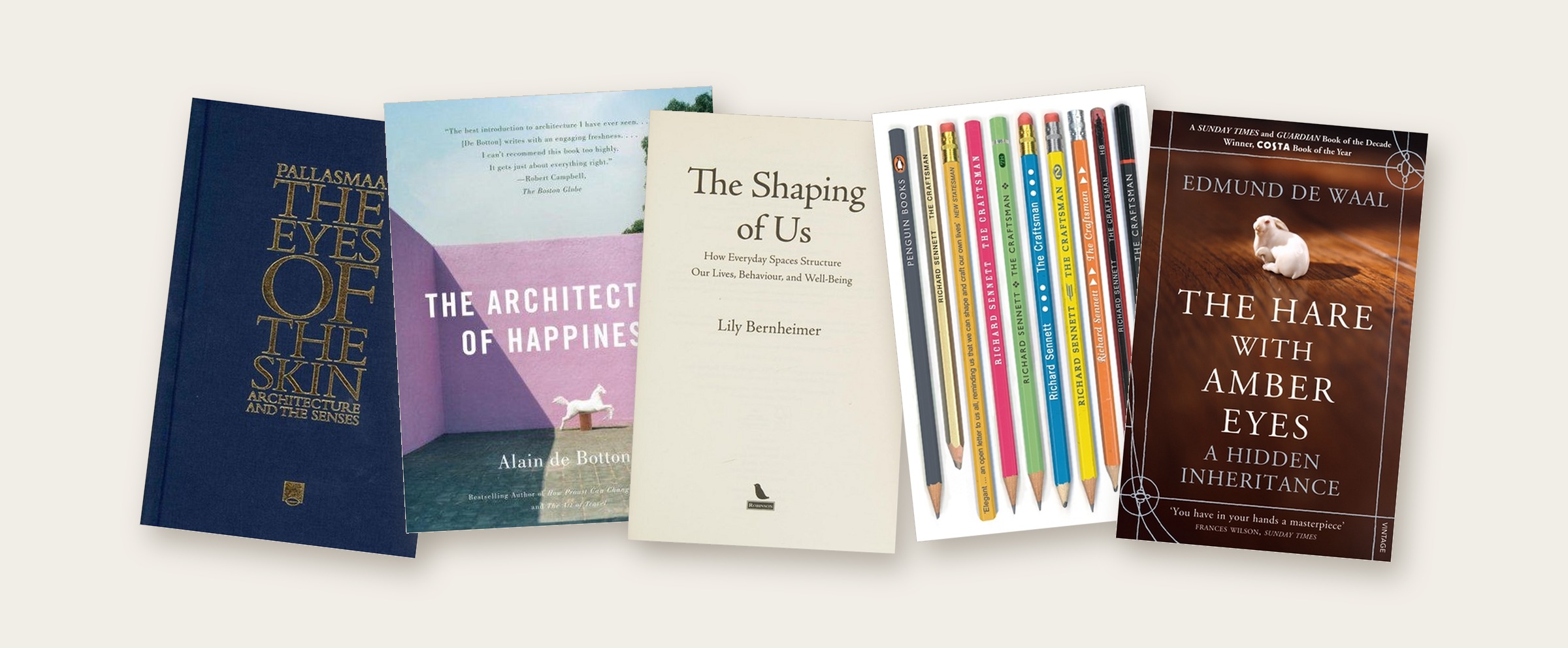
This time, the pile is literally the pile. Most design books are books of pictures, and pictures have their place. These five are not that kind. Not one of them will tell you what to buy, and only one was written by an architect. The others come from a philosopher, a psychologist, a sociologist and a potter.
What they share is the question underneath the pictures: why. Why does one room calm us and another wear us out? Why do we keep some objects for a lifetime and throw others away within a year? I have set them in an order that runs roughly the way a project does, from how a room feels, to how people behave in it, to how things are made, to how they are kept.
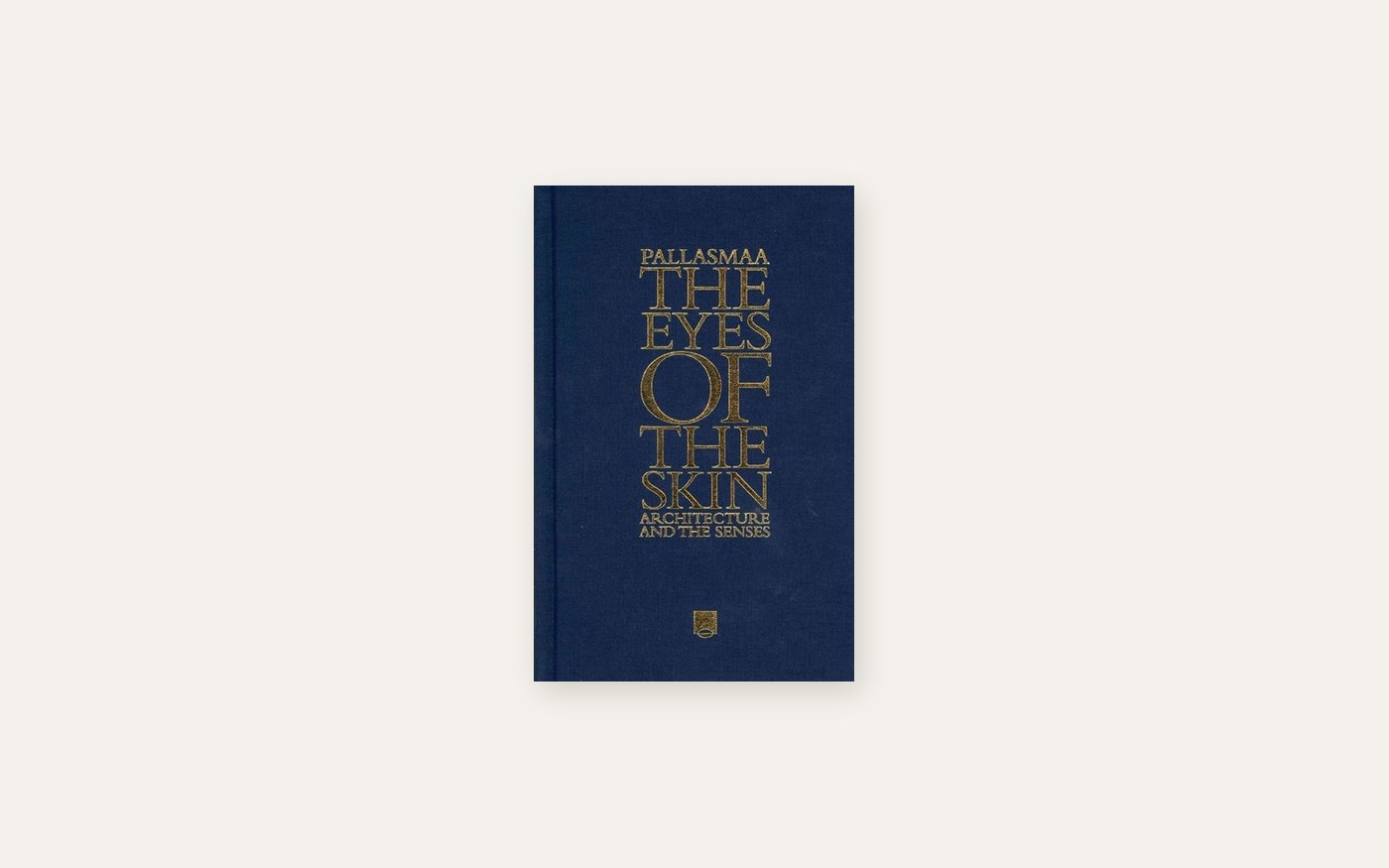
The thinnest book on the shelf and the one that does the most damage. Juhani Pallasmaa, the Finnish architect who directed the Museum of Finnish Architecture from 1978 to 1983, published it in 1996 as a short polemic of barely sixty pages. Its argument is that architecture has become an art for the eye alone, designed to be photographed, and has forgotten the rest of the body: the weight of a door handle, the sound of a room, timber under a bare foot, the smell of a house.
Read it once and you will never again judge a room from a photograph. It is now taught on architecture courses, and Wiley’s 2012 edition carries a foreword by Steven Holl. I would add it to the reading of anyone who furnishes a home, because a home is the one building we experience with every sense, every day. Monique puts the same idea in a single sentence.
“Good design should be loved and touched and sat on.”
— Monique Tollgård
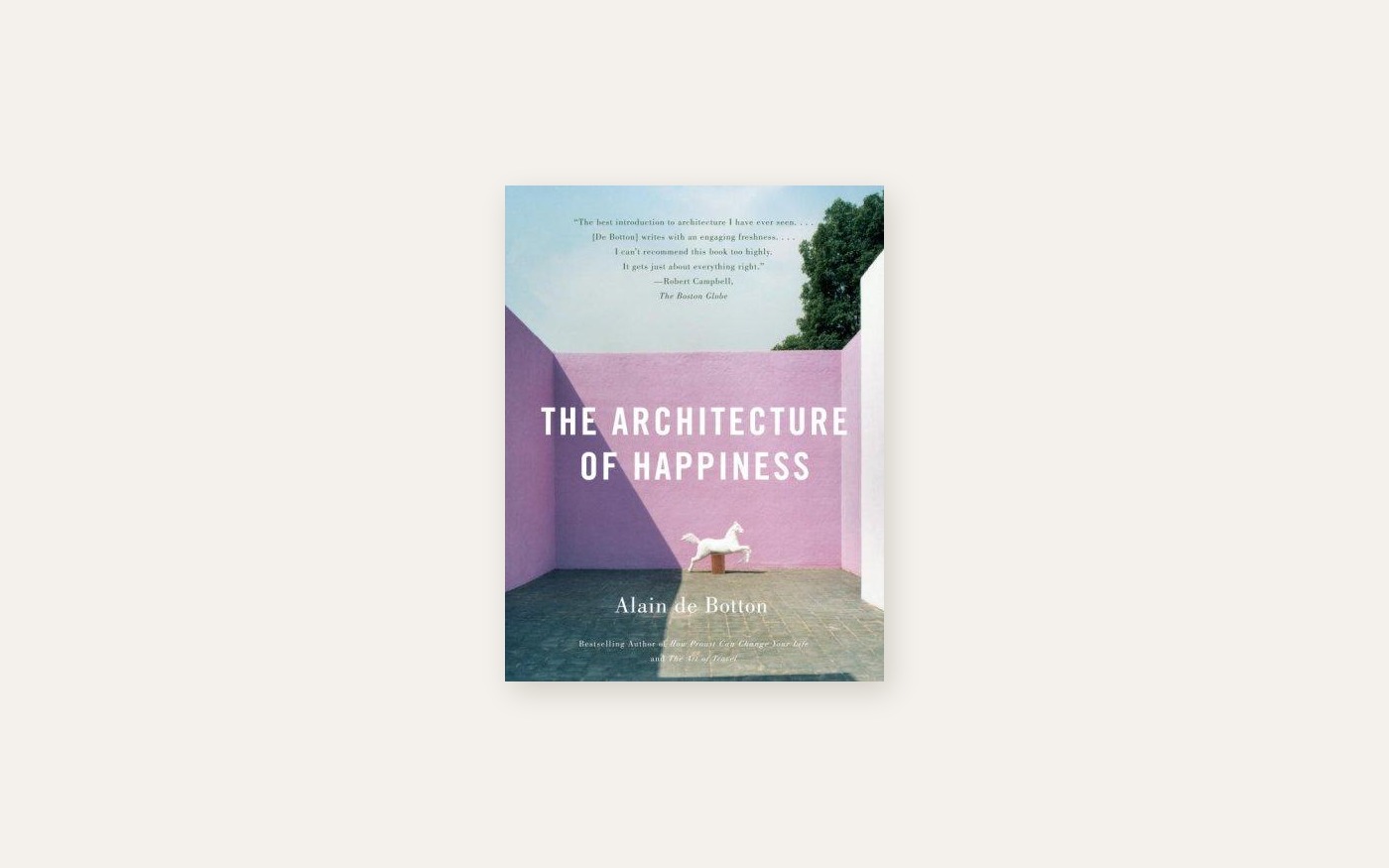
If Pallasmaa is about the body, de Botton is about the feelings. The Architecture of Happiness came out in 2006, and it is one of the three books that have shaped my thinking most. De Botton is not an architect, which is its great strength. He asks the question architects tend to step around: why does a building make us feel the way it does?
His answer, broadly, is that buildings talk. They carry values and moods, and we become slightly different people in different places. So choosing a house, a chair or a colour is not vanity. It is an attempt to keep in view the person we would like to be. He went on to co-found The School of Life in 2008 and Living Architecture the following year, which lets anyone rent a house designed by a leading architect and live in good architecture for a week. Both feel like the book put into practice.
From feelings to behaviour. Lily Bernheimer is an environmental psychologist, and The Shaping of Us (Robinson, 2017) is about how everyday spaces change the way we act: homes, offices, hospitals, streets. It is full of findings you could use on a Monday morning. In an open-plan office some of us are prospectors, who want the view, and some are refugers, who want a wall at our backs. We value a thing more if we have built it ourselves, which she calls the IKEA effect. A little nature in a room makes the people in it calmer.
Her book put research behind something we had long been designing by instinct, and gave it a vocabulary clients understand immediately. Human evolution, she argues, shows that we need refuge as well as prospect. We need somewhere to feel safe and secure, and we need a view in front of us, as much for its beauty as for its warning that something might be coming to eat us. Open-plan living is prospect at its purest.
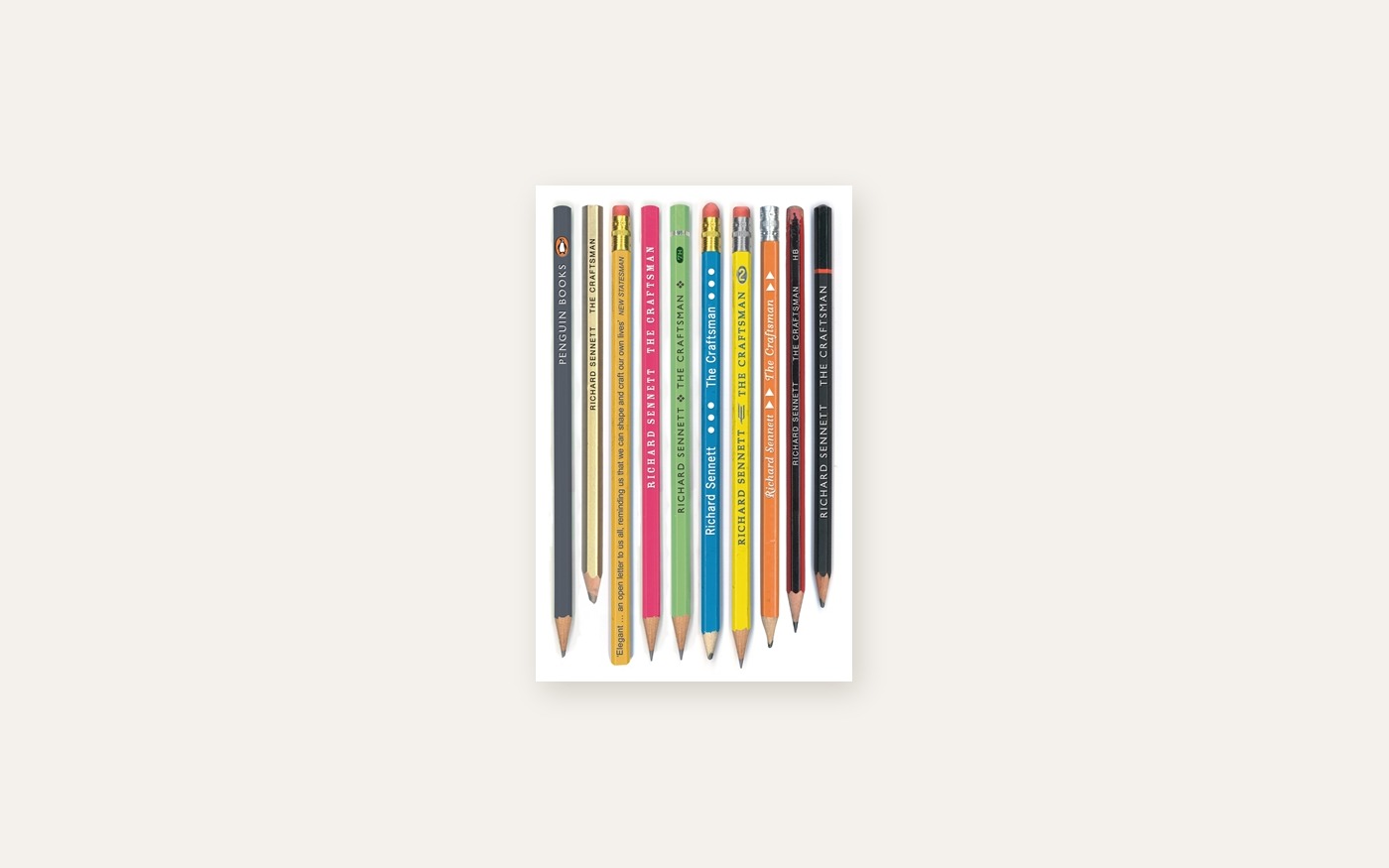
From people to makers. Richard Sennett trained as a cellist at the Juilliard School until an injury to his hand ended that career, and became instead one of the great sociologists of work, teaching at the LSE and NYU. The Craftsman, published in 2008, is the first of his Homo Faber trilogy, and its argument is simple and unfashionable: making is thinking. The hand and the head are not separate departments. The person who does a job well for its own sake is thinking through the material.
It is the book I would hand to anyone who asks why a hand-finished walnut drawer costs what it does. The answer is not the walnut. It is the thousands of hours of practice standing behind the hand that finished it, and that is what you are buying, and what you are keeping alive when you buy it. I choose pieces that speak to a tradition of making, often by hand, and of the place that they come from.
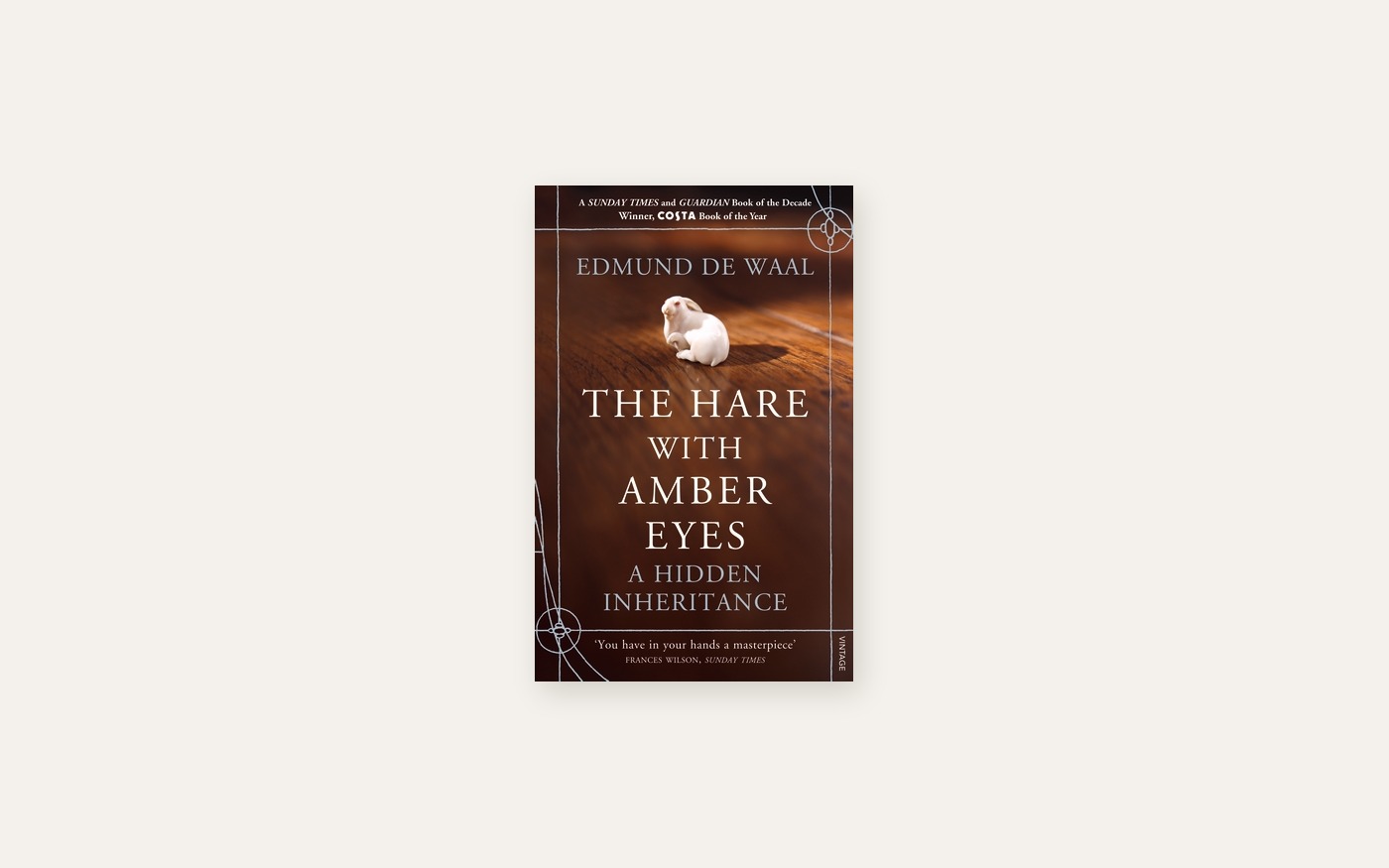
And finally, from making to keeping. Edmund de Waal is a potter, which matters: he writes about objects as someone who makes them. The Hare with Amber Eyes, published by Chatto & Windus in 2010, follows 264 Japanese netsuke, small carved figures in wood and ivory, none bigger than a matchbox, through his family, the Ephrussis. In Paris they belonged to Charles Ephrussi, a collector, an early champion of the Impressionists and one of Proust’s models for Swann. In Vienna in 1938, when the Nazis took the family’s possessions, a maid named Anna hid them in her mattress. De Waal first saw them in his great-uncle’s flat in Tokyo.
It won the Costa Biography Award, and it sits alongside de Botton as one of the three books I return to most. I quoted it in the house museums piece and I will go on quoting it, because it is the best book I know on why objects matter. Not their price, nor their pedigree, but the hands they pass through. Every heirloom piece we help a client choose is, in a small way, a netsuke: something that will outlive the room it was bought for and carry a story nobody can yet write.
A philosopher, a psychologist, a sociologist, a potter and an architect. Between them they cover the senses, the feelings, the behaviour, the making and the keeping, which is close to the whole of what a home has to answer. None of them is about style, and that is why they have lasted on my shelf when most books of beautiful rooms have not.
In the studio we begin every project by looking for its red thread: why we are telling this story, of these people, in this place. Picture books are good at what. These five are about why, and the why is the part that lasts.
The rest of the series, and everything else from the studio, is in Studio news.
Book cover images are reproduced for the purpose of review and remain the copyright of their respective publishers.