Take Five. A series in which I empty my pockets and set out the things I keep going back to (magazines, hotels, books, restaurants, furniture and lighting brands) and try to say honestly why. It is not a ranking, and nothing in it is sponsored. Think of it less as a list of recommendations than as being handed the pile from beside my desk.
This time, technology. For most of the twenty years we have been designing homes, the brief for the television, the speakers and the tangle of chargers has been the same: make it disappear. We build joinery to swallow screens, chase cables into walls and hide routers behind books. A great deal of the craft of a well-run house goes into concealing the machines that run it.
That is beginning to change, slowly, because a few makers have started to design tech as though it belonged in the room. Not as a gadget in a nicer box, but as an object with a material, a weight and a reason to be looked at. A charger in stone. A speaker you can see into. A screen that spends most of the day as a picture.
“Increasingly we have become interested in how to help our families live more meaningful, balanced and connected lives together. While the balance of form and function is at the head of our practice, you might say the heart of our work is about how to create spaces and opportunities for family time and personal growth. Music, reading, gardening, cooking, homework, games — these are some of the family rituals that a well-planned house can design in.”
— Tollgard, The Tollgard Principles
Music and cooking are on that list for a reason, and so, these days, is the screen. The five below are the ones I would be happy to leave out on show.
A declaration before we begin: two of the five, POQQ and Transparent, are brands we stock at Tollgard. We do not sell the other three, and none of the makers has asked to be here. They are simply the pieces of technology I would let into a room we had designed.
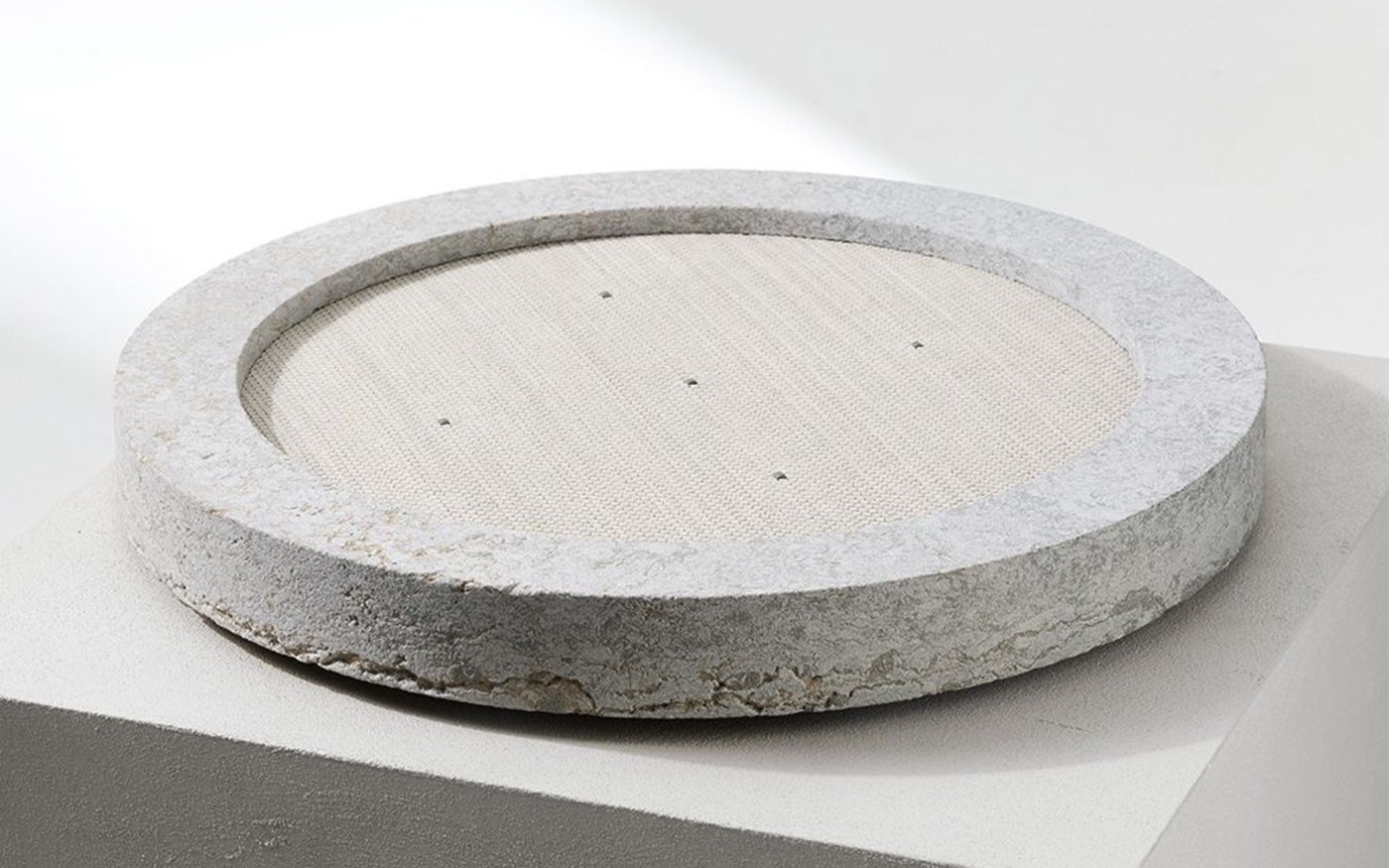
The one that does not look like a charger at all. POQQ is a small Belgian company based in Bruges, and Pigna is a disc of natural stone (Pierre de Varenne) 46 centimetres across and a little over five tall, with its top laid in hand-woven leather. It weighs nearly ten kilos, which tells you it is meant to stay where you put it.
Underneath the stone is a serious piece of engineering. It charges four phones and a pair of earbuds at once, wirelessly, on the newest Qi2 standard, and it carries its own battery, so it can sit in the middle of a dining table or on a hall console with no cable trailing to the wall. That is the real design achievement. Every household has a drift of chargers and leads somewhere near the front door. Pigna gathers them into one object that is worth looking at, and then lets you put it anywhere.
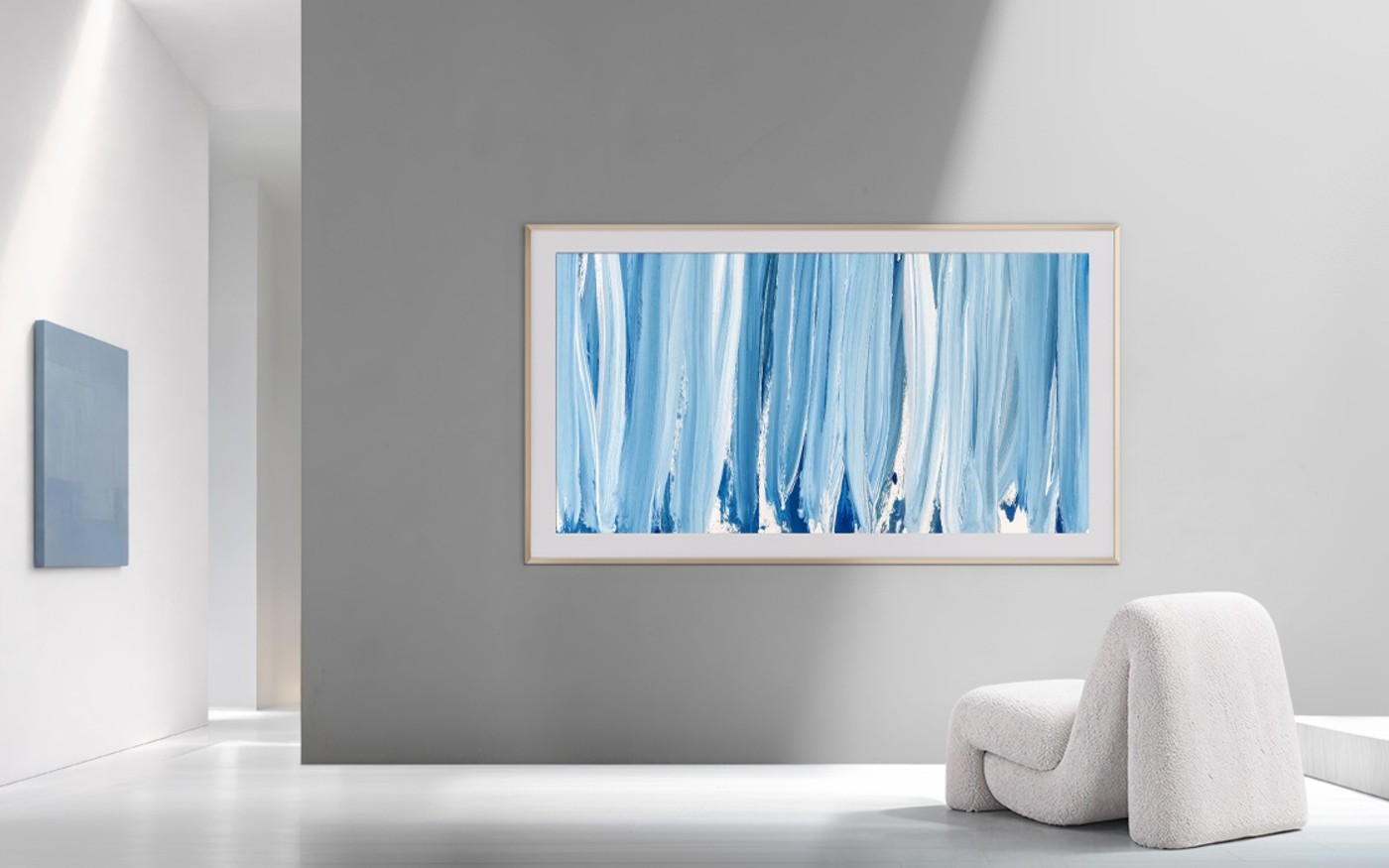
Image courtesy of Samsung
The one that solves the oldest argument in the living room. Where does the television go, and why does it have to be a black rectangle for the sixteen hours a day nobody is watching it? Samsung’s answer, first made in The Frame and now refined in The Frame Pro, is that it does not. When it is off, it hangs as a picture, drawing on a library of several thousand artworks, with a matt, low-glare screen that reads far more like paper than glass. Sensors wake it into its art mode when someone walks into the room.
The Pro is where the idea finally grows up. The picture is now Neo QLED, the set sits under three centimetres deep on a slim wall mount, and the magnetic bezels come in two profiles, so it can be framed to suit the room. Most importantly for anyone who designs interiors, the inputs live in a separate box that talks to the screen wirelessly and can sit up to ten metres away. No cable to the wall, no channel to chase into the plaster. Art on the wall or television: you no longer have to choose.
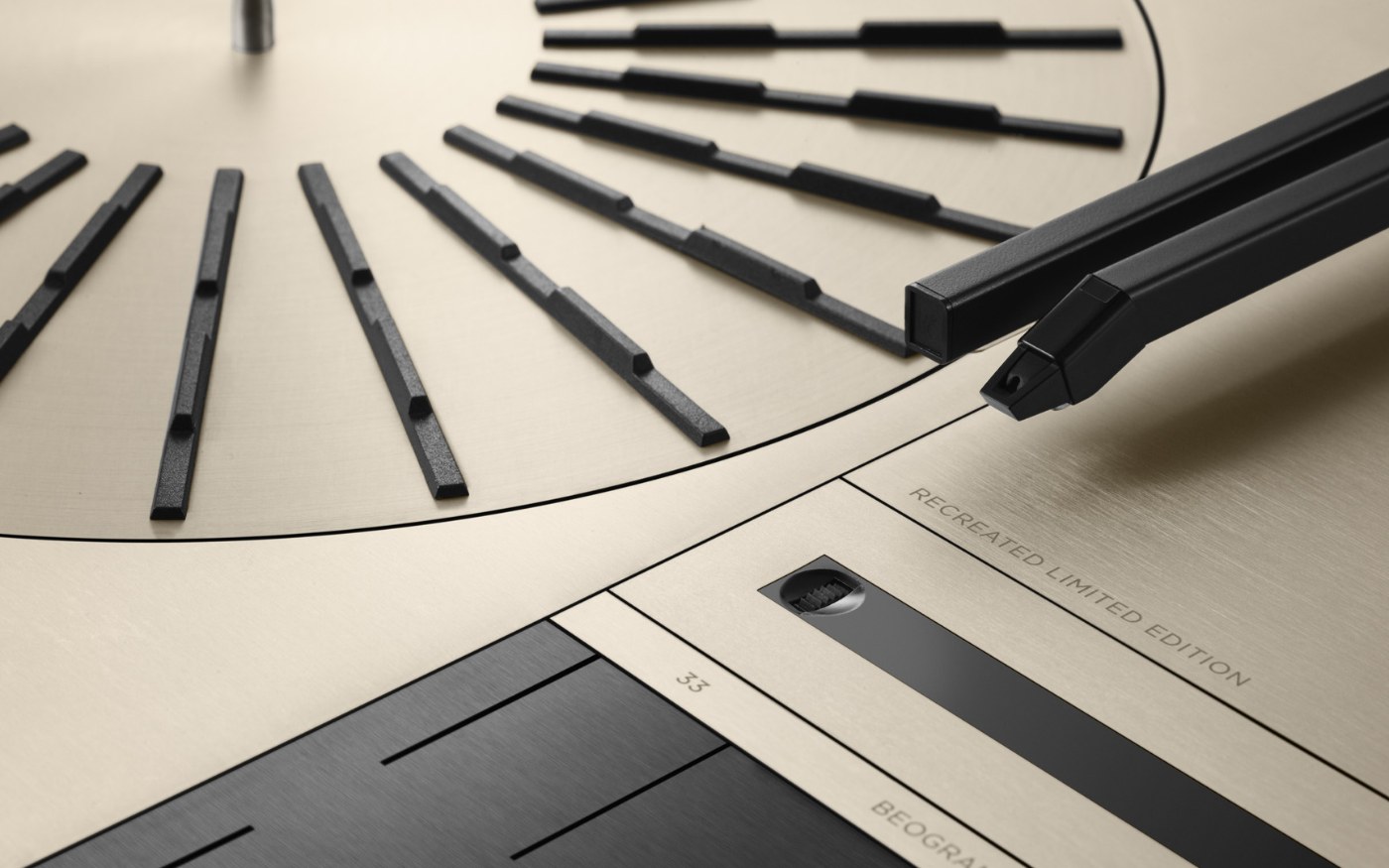
Image courtesy of Bang & Olufsen
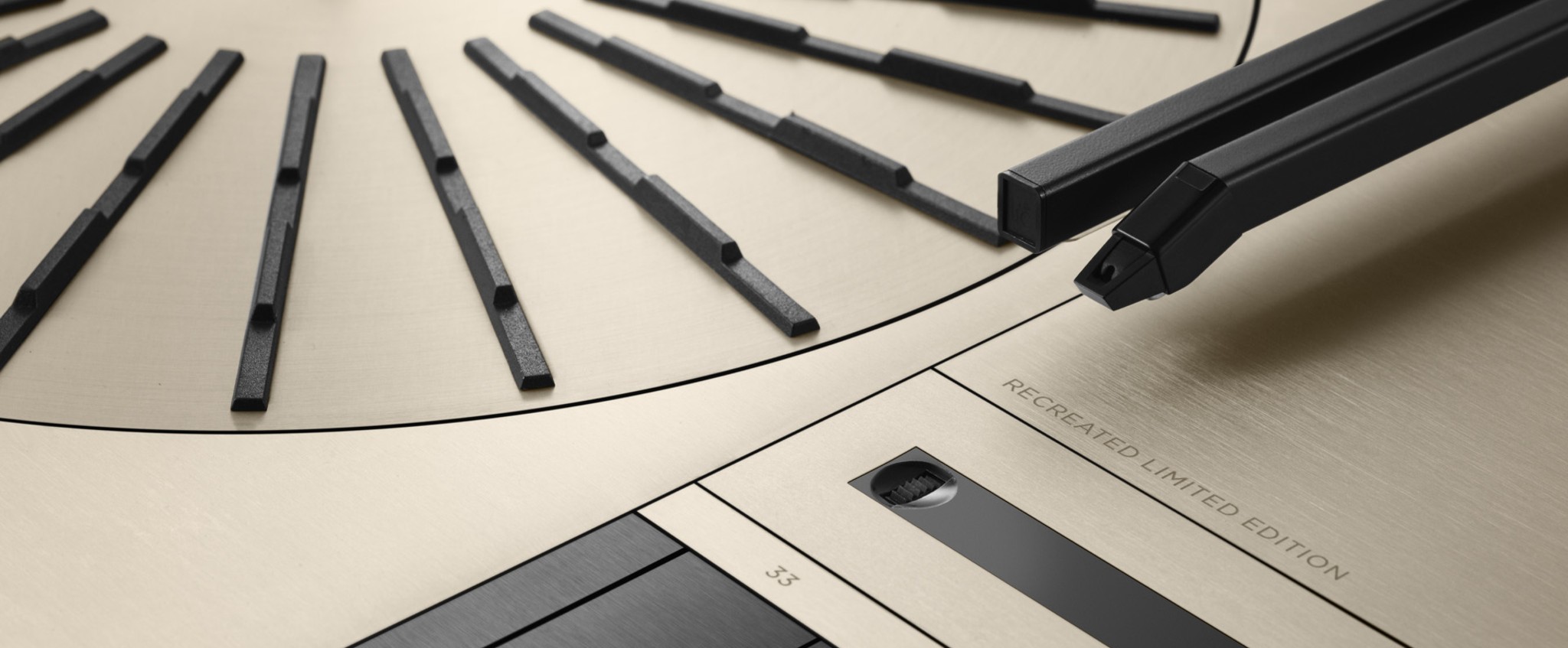
The one back from the dead, or from the 1970s, to be exact. Bang & Olufsen has been making hi-fi in Struer, on the Danish coast, for a century, and for most of that time it has argued that sound and design are the same discipline. The Beogram 4000, drawn by Jacob Jensen in 1972, is that argument at its purest: a low, flat slab of brushed aluminium and warm wood, with nothing on its surface that does not need to be there. It became one of the most celebrated pieces of industrial design of its time, and it still looks as though it arrived from the future.
The 4000c is part of what B&O calls its Recreated Classics programme. In its Struer factory, each turntable is cleaned, refurbished and fine-tuned by hand, and brought up to date for the way we listen now. What has not changed is the engineering that made the original remarkable: a tangential arm that tracks straight across the record, as the cutting head did when it was made, rather than swinging in an arc, and a suspended chassis that keeps the needle in the groove however lively the room. An absolute design classic, reimagined for the twenty-first century. It is also the most persuasive argument I know for keeping records, and for leaving the turntable out where people can see it.
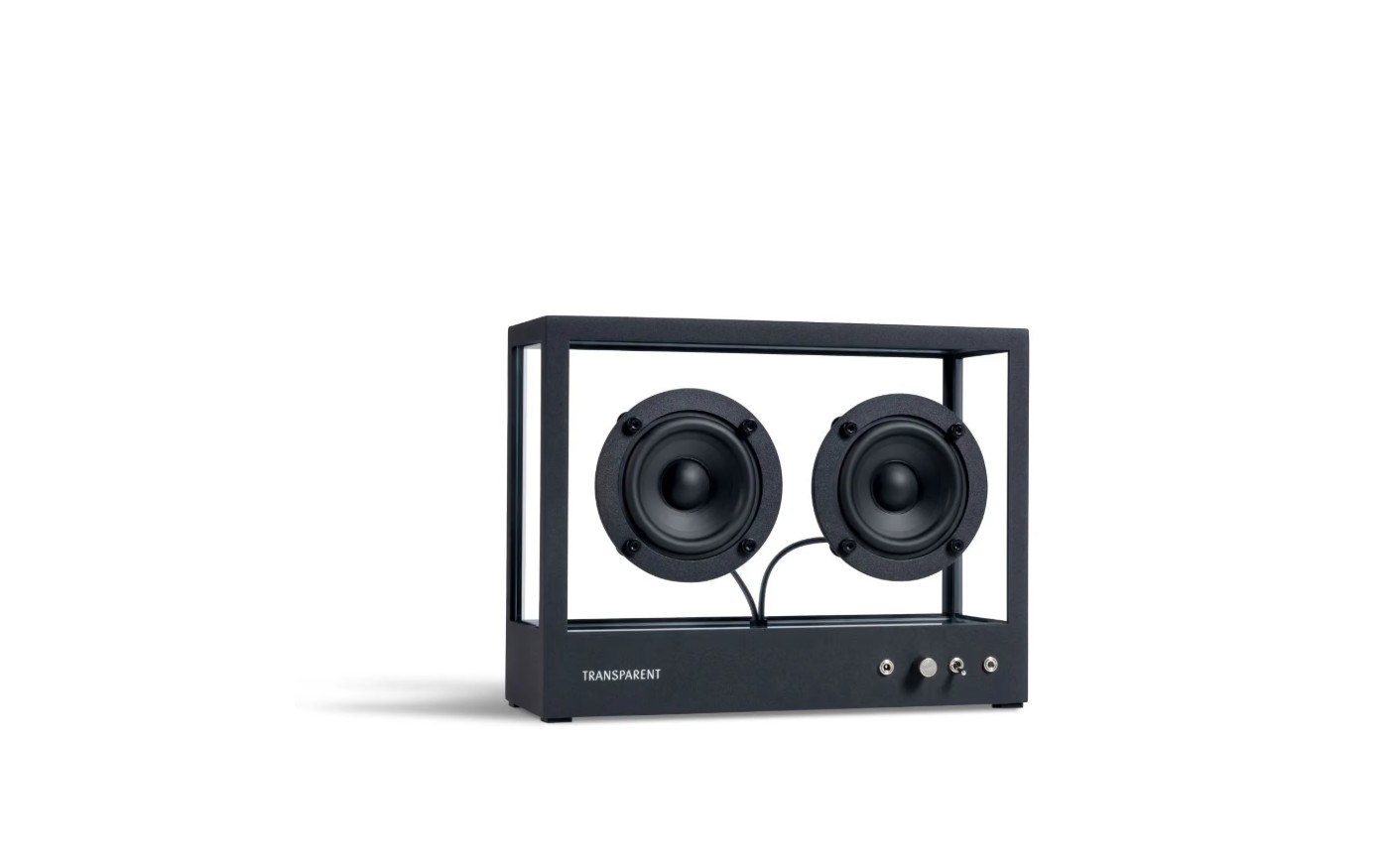
The one you can see into. Transparent grew out of a Stockholm design studio called People People, whose founders first sketched the idea of a glass speaker more than a decade ago. The Small Transparent Speaker is exactly what it says: a box of tempered glass and aluminium, small enough for a bedside table or a bookshelf, with every driver and wire on show.
It has a slightly retro feel, like a piece of studio equipment from the 1970s, and I think that is why it works so well in bedrooms and studies, the quieter rooms, where a big statement would be wrong. Behind the looks is a principle I admire. It is built in modules, so the parts that age (the electronics, the battery, the wireless) can be repaired or replaced while the glass and aluminium carry on. A speaker designed to be kept rather than replaced. Think twice, buy once.
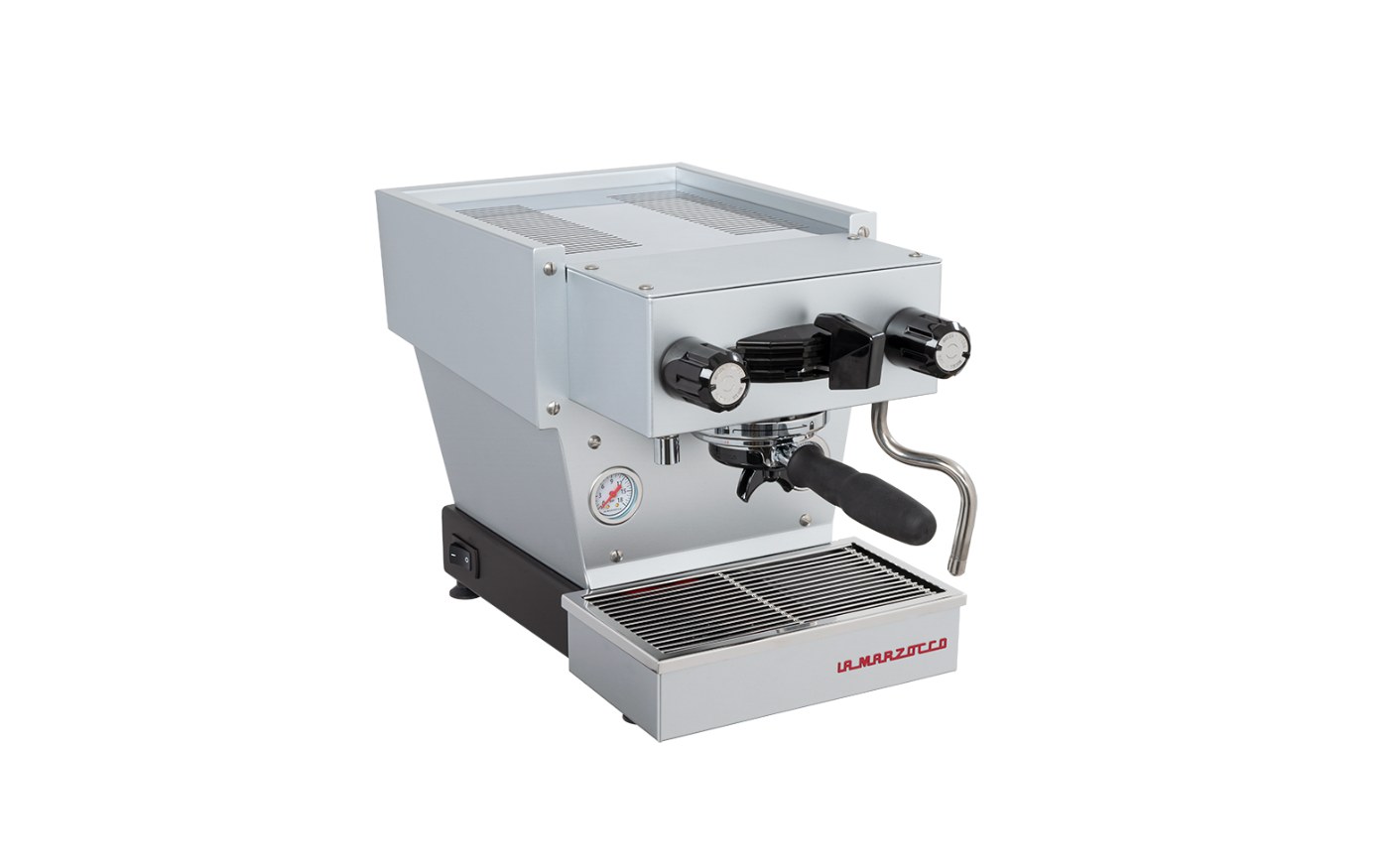
Image courtesy of La Marzocco
The one that brings the café home. La Marzocco has been making espresso machines in Florence for longer than most of us have been drinking espresso, and its Linea is the machine you will have seen behind the counter of half the good coffee bars you know. The Linea Micra, unveiled in Florence in November 2022, was the company’s first machine designed for the home from the start: a scaled-down version of the Linea Classic S, small enough for a kitchen counter at 34 centimetres high and 29 wide.
It has not been scaled down where it matters. There are two boilers, one for brewing and one for steam, so you can pull a shot and froth milk at the same time, as a barista would. It is built by hand in Florence, and it comes in a run of colours, though I would choose the plainest. It is simple, industrial and honest about what it is: a professional tool, made to the scale of a kitchen. Now you can be a barista at home. And, like the best tools, it looks good on the counter whether or not anyone is using it.
A stone disc, a picture frame, a turntable from 1972, a glass box and a café machine in miniature. What they share is that each was designed for the room before it was designed for the specification sheet. Each has a material you would choose for its own sake (stone, leather, wood, glass, aluminium) and each has a good answer to the question every piece of technology in a home has to face: what does it look like when it is off?
They also deal with the cable, which is the unglamorous heart of the matter. Pigna carries its own battery. The Frame Pro sends its signal through the air. The Transparent speaker streams over wifi. The best tech for the home is the kind that asks the least of the walls.
“I believe our why is ‘To better people’s lives through design’.”
— Staffan Tollgård, The Why
That applies to the things that plug in as much as to anything else in the house. If an object is going to be in the room every day, it should earn its place there.
The rest of the series, and everything else from the studio, is in Studio news.